Dar Khemir: Launching the Azure Suite
A launch campaign for the signature suite of a twelve key coastal hotel, built to convert European travel buyers and Tunisian guests into direct bookings.
The brief
Dar Khemir is a twelve-key boutique hotel on the northern Tunisian coast, a restored nineteenth-century merchant residence reopened as a design-led retreat. The brief was a launch campaign for its new signature suite, the Azure Suite, with private plunge pool, terrace over the Gulf of Tunis, and a restored zellige hammam. Two audiences: European travel buyers in the Condé Nast reader profile, and Tunisian HNW guests booking weekend escapes or anniversaries. The objective was direct bookings in the first ninety days and pickup in two design or travel titles.
The strategy
The category is crowded with hotels that shout. Dar Khemir needed to be quiet. Four rules were locked before a single frame was produced. These four rules were printed on the wall for the production.
Quiet
Quiet over loud. Restraint in palette, type, and composition.
Tunisian
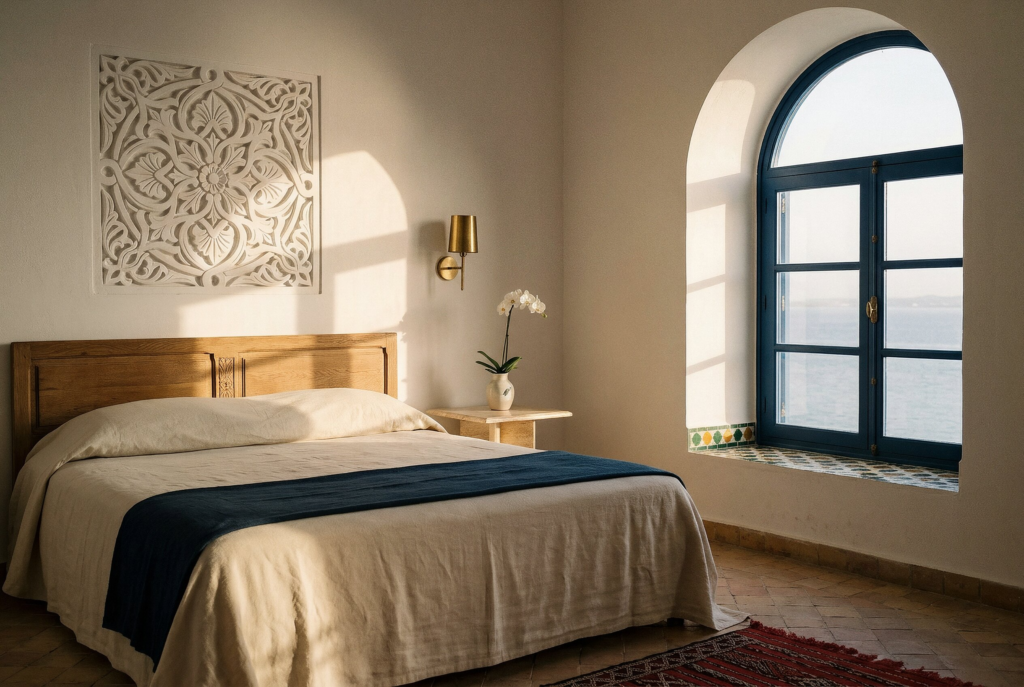
Tunisian, not Mediterranean-generic. Every frame carries at least one culturally specific anchor, zellige, carved gebs plaster, sefsari silk, Nabeul ceramic, bilingual signage.
Human
Human presence, never crowd. One or two people maximum per frame.
Two hours
The brand lives at two hours only: late-afternoon golden hour and the blue hour after sunset.
The brand system
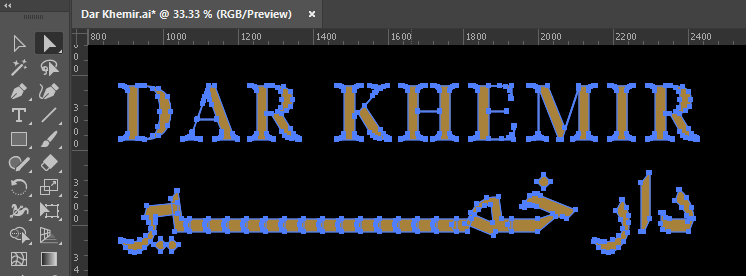
A bilingual wordmark in French and Arabic, set in a modern high-contrast serif with a matching Naskh lockup. Three colors, no more:
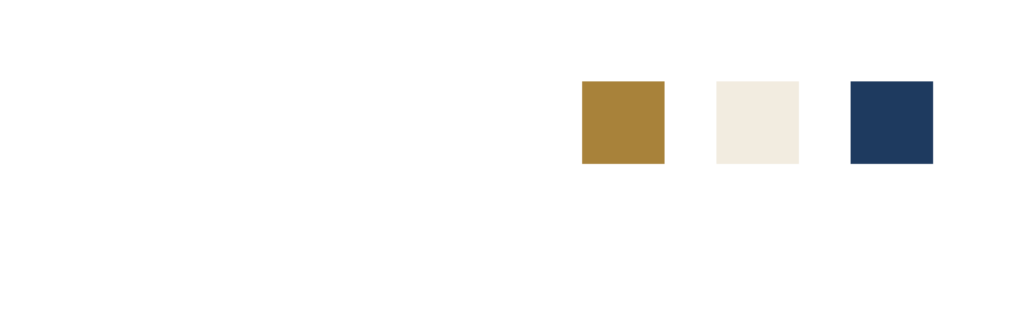
- Chaux (#F2ECE0), the whitewash of a Tunisian coastal wall, at sixty percent.
- Bleu Sidi Bou (#1E3A5F), the ultramarine woodwork of the north coast, at thirty percent.
- Laiton (#A8823A), aged brass, at ten percent.
A display serif for wordmark and pull quotes, a humanist sans for body, a modernized Naskh for Arabic. Latin and Arabic never fight for the same baseline: they sit in deliberate lockups, separated by rule and white space.
The campaign
Hero stills, a brand film, social cutdowns, and a print spread for magazine placement.
Stills walk the suite across a single day: the carved studded door at golden hour, the arched window onto the Gulf, the plunge pool from above, the zellige hammam in steam, breakfast on the terrace, Tunisian coffee, brik, bsissa, deglet nour dates, a woman in a modernized sefsari at the terrace rail, a brass tap over a travertine basin, and the rooftop at blue hour with the Gulf going dark behind two seated guests.
The film threads the same day in cuts, ending on the bilingual wordmark against chaux.
How it was made
The project was produced with AI image and video generation, then finished by hand. That order matters. The AI pipeline handled generation; craft handled everything else.
A full brand system was locked before any render, wordmark, palette, type, four-rule art direction guide.
Then a reference library was built specifically for Tunisia: Sidi Bou Said facades, carved gebs interiors, Tunisian zellige (larger pieces, ochre and green, different from Moroccan micro-mosaic), Djerba travertine, Nabeul ceramic, sefsari silk, Tunisian faces. Base models default to generic Mediterranean or, worse, to Moroccan riad iconography. Without real Tunisian references feeding the generation as image-to-image anchors, the set would have looked like “somewhere in North Africa”, the single outcome the brief forbade.
Five master anchor assets were generated first: a location plate, two character sheets with the talent, a material library, and the bilingual wordmark, the wordmark built in Illustrator, never AI-rendered. Every hero shot and every film cut then referenced those anchors at high weight, holding character identity and material consistency across the set.
All Arabic type in the final assets was typeset in Illustrator and composited in post. AI does not render Arabic letterforms reliably; for a Tunisian audience, a broken letter is a dealbreaker.
Every final still passed through a manual post-production pass: color grade to a single LUT, skin retouch restrained to micro-detail, real-texture overlays on linen and plaster, real-hand composites where the AI struggled. The film was cut and graded in the editing room the same way a shoot would be, the generated clips are the footage, not the final product.
What it was built to do
The campaign was built to land Dar Khemir in the design-hotel conversation alongside regional peers, drive forty direct suite bookings in the first ninety days, and earn placement in two design or travel titles. It was designed for restraint, the reader’s eye invited, not demanded. Whether it would have hit those numbers is the job of a real booking funnel the fictional brand doesn’t have. The campaign is the proof of what the production can carry.
Watch the film
Disclosure
Self-initiated concept project. Dar Khemir is a fictional brand created to demonstrate AI-assisted campaign production for the luxury hospitality category. No real hotel or person is represented.